BMW F10 (2010–2017) — History, Engines, Weak Points, Fuel Consumption
The BMW F10 is the sixth generation of the 5 Series, produced from 2010 to 2017. This generation marked BMW's broad shift to smaller-displacement turbocharged engines — with a visible efficiency gain while keeping real-world performance intact, and on the diesels, even improving it. Here's a breakdown of which versions are the strongest picks and what to watch for when buying.
History
The F10 replaced the E60/E61 in 2010. The design returned to a more restrained, "evolutionary" language after the controversial Bangle-era E60. Alongside the F10 sedan and F11 wagon, a long-wheelbase F18 version existed for the Chinese market.
The M5 F10 debuted in 2011 with the S63 engine — a twin-turbo V8 that replaced the previous generation's naturally aspirated V10. This split the community: some appreciated the sharply increased power and torque, while others mourned the loss of the naturally aspirated character.
F10/F11 production ended in 2017 with the transition to the G30.
Engines
Petrol:
- N20 — four-cylinder turbo engine on early 520i/528i.
- N55 — single-turbo inline-six on the 535i, replacing the troublesome N54 and proving significantly more reliable.
- N63 — twin-turbo V8 on the 550i, with turbochargers mounted inside the engine's V ("hot-vee" layout).
Diesel:
- N47 — four-cylinder diesel, on 520d/525d.
- N57 — inline-six diesel, on 530d/535d.
M5:
- S63 — twin-turbo V8, 4.4L, 560–600 hp depending on version (including Competition).
Weak Points
- N47: timing chain position. A well-known design quirk — the N47's timing chain sits on the transmission side rather than the accessory side, making replacement an exceptionally labor-intensive and expensive job. One of the top things to check when buying a diesel version.
- N63: elevated oil consumption and timing chain. The V8 became known as a problem engine — BMW even launched a dedicated service program (the "Customer Care Package") covering several typical faults at once, including the high-pressure fuel pump, ignition coils, and elevated oil consumption.
- N20: timing chain guides. Can wear relatively early; service history is worth checking.
- Electric water pump. A continuation of the trend from the previous generation — needs periodic replacement.
- S63 (M5): similar N63-derived chain and oil issues, though the engine was revised over its production run. The high-pressure fuel pump is also worth checking.
Fuel Consumption
| Engine | Model | Consumption, L/100km |
|---|---|---|
| N20 (turbo) | 520i / 528i | ~7–8 |
| N55 (turbo) | 535i | ~9–10 |
| N63 (turbo V8) | 550i | ~11–12 |
| N47 (diesel) | 520d / 525d | ~5–6 |
| N57 (diesel) | 530d / 535d | ~6–7 |
| S63 | M5 | ~11–13 |
Owner Feedback
Owners note a real step forward in efficiency compared to the E60 while keeping BMW's signature dynamics — this is especially true of the 520d/530d diesels, which became one of the most popular choices in Europe thanks to their balance of consumption and character. The N55 is praised for reliability, in contrast to its temperamental predecessor, the N54. The main "red flag" mentioned in nearly every review is the N47 with its expensive-to-replace timing chain, and to a somewhat lesser extent the N63 with its history of oil- and chain-related recall campaigns. The M5 (S63) is praised for colossal power and everyday usability, but owners note it feels heavier and more "removed" than the naturally aspirated M5s of earlier generations — opinions here diverge depending on what an owner wants from an M5.
Photos
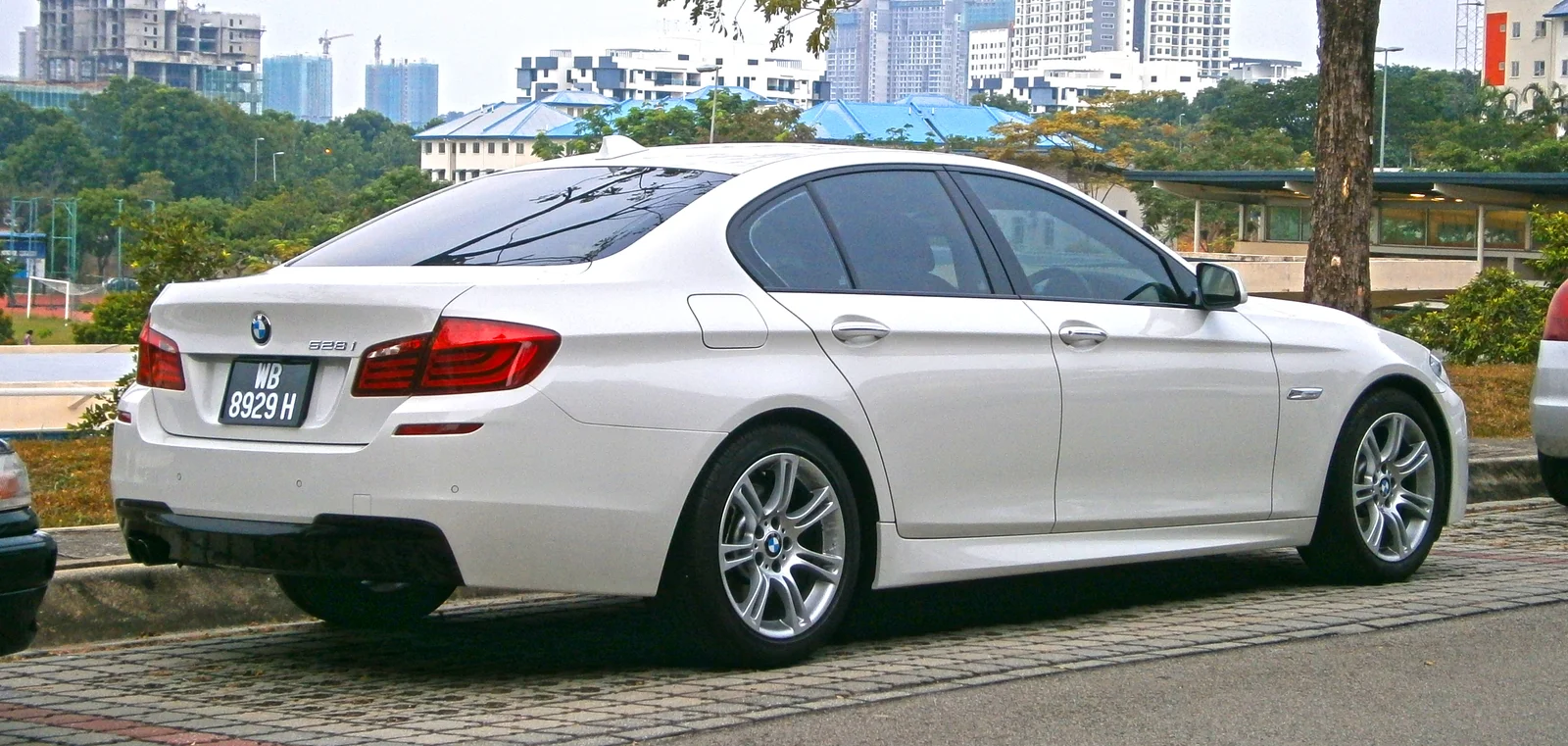
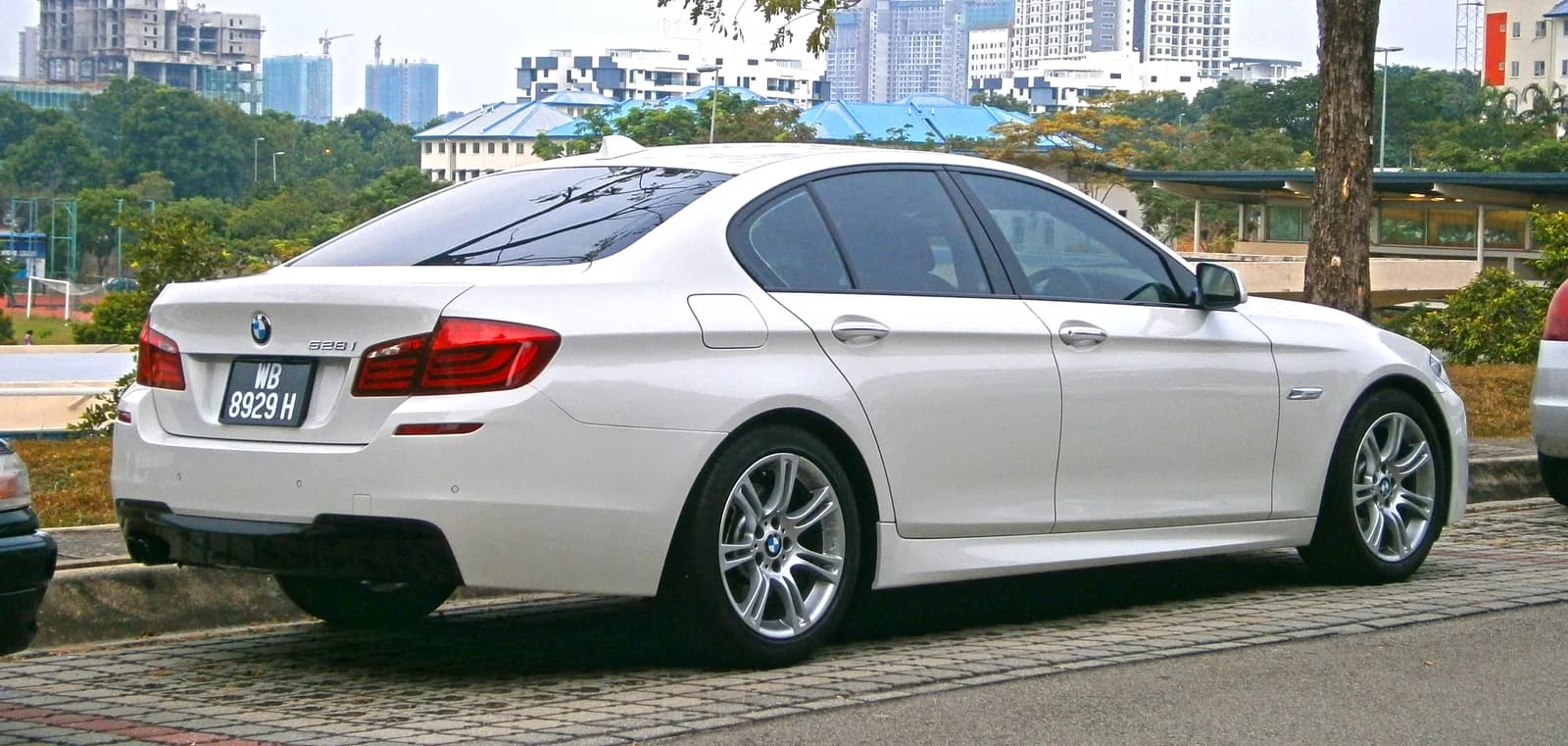
Photo: Wikimedia Commons (CC BY-SA 2.0).
Other models
Found your model?
Join the club