BMW E36 (1990–2000) — History, Engines, Weak Points, Fuel Consumption
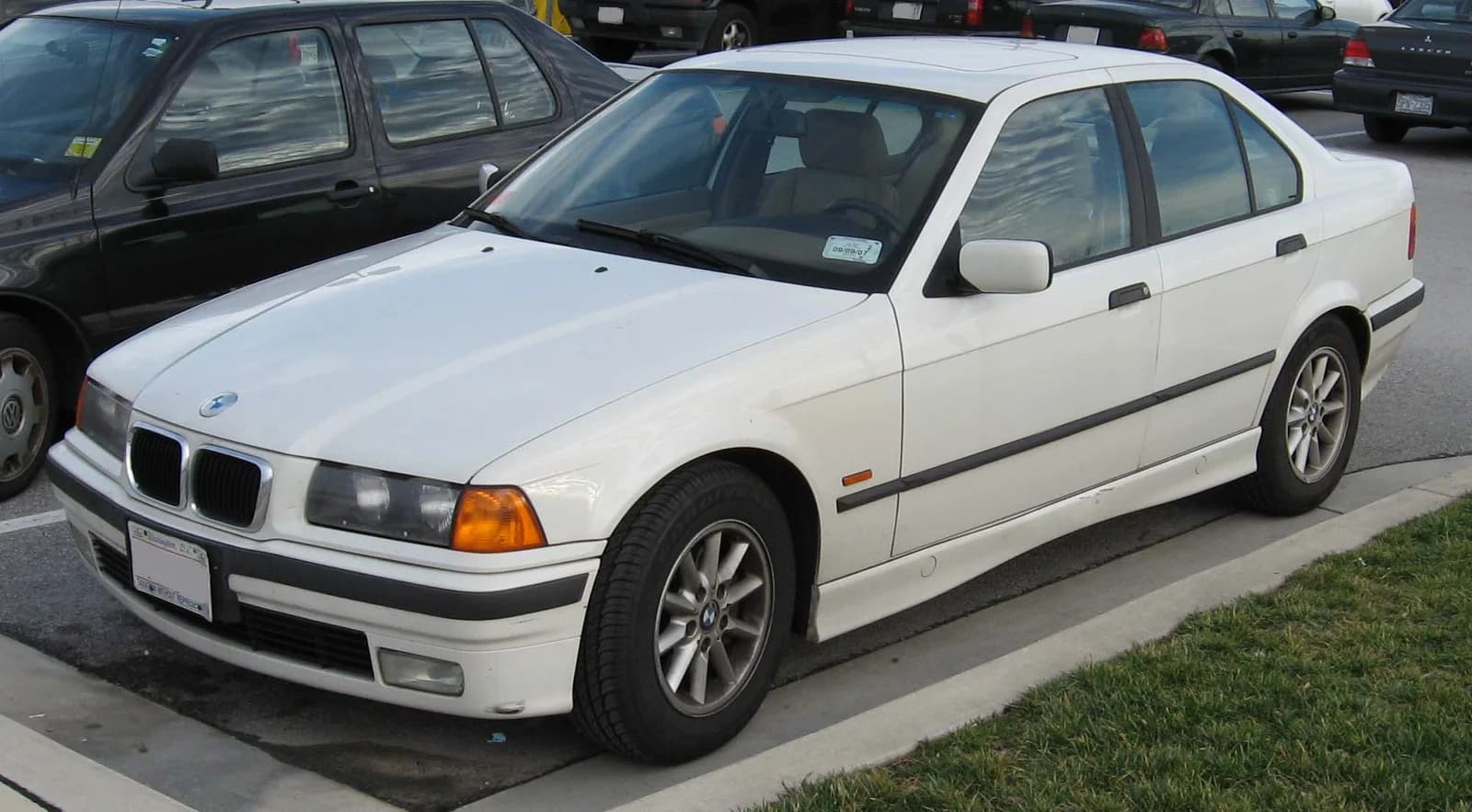
The BMW E36 is the third generation of the 3 Series, produced from 1990 to 2000. Compared to the E30, it was a huge step forward: a stiffer body, a multi-link Z-axle rear suspension, and noticeably improved comfort — while keeping the rear-wheel-drive character and driver involvement intact. For many enthusiasts, the E36 is the last 3 Series generation that still feels like a genuinely "mechanical" BMW.
History
The E36 replaced the E30 in 1990, starting as a sedan. The coupe followed in 1992, the convertible in 1993, the three-door Compact hatchback in 1994 (which technically used a simplified rear suspension carried over from the E30 to cut costs), and the Touring wagon in 1995.
The E36 M3 debuted in 1992 with a far more "civilized" character than the rally-bred E30 M3 — more of a fast daily-driver GT than a homologation track weapon. European versions got the higher-output S50 engine, while US versions received the less powerful S52 due to emissions requirements.
E36 production ended in 2000 with the transition to the E46.
Engines
Petrol:
- M40 / M42 / M43 / M44 — the family of four-cylinder engines on 316i/318i/318is throughout the model's life cycle.
- M50 — inline-six (1990–1995) on 320i/325i, with single VANOS from 1992.
- M52 — an evolution of the M50 (from 1995) with an aluminum block, on 323i/328i.
Diesel:
- M51 — inline-six, on 325td/325tds.
M3:
- S50 / S52 — the M3's six-cylinder engines: the higher-output European S50B30/S50B32, and the emissions-limited US-spec S50B30US/S52B32.
Weak Points
- Cooling system. The M50/M52 marks the start of BMW's plastic cooling-component era — the radiator, thermostat, and hoses can crack with age. Preventive replacement is the standard advice.
- VANOS. On the single- or double-VANOS M50TU/M52, the seals wear out, causing rattling and flat spots in power delivery.
- Rear subframe bushings. Wear over time, felt as clunking over bumps.
- Rust. Less pronounced than on the E30, but still present on older examples.
- Window regulators and interior plastics. A classic BMW issue from this period — dashboard cracking and worn minor electrics.
Fuel Consumption
| Engine | Model | Consumption, L/100km |
|---|---|---|
| M40/M43 (4-cyl) | 316i / 318i | ~8–9 |
| M50/M52 (6-cyl) | 323i / 328i | ~10–11 |
| M51 (diesel) | 325td | ~7–8 |
| S50/S52 | M3 | ~11–13 |
Owner Feedback
Owners almost universally note that the E36 is significantly more comfortable and quieter than the E30, without losing its rear-wheel-drive character — a trade-off that many consider the sweet spot. The six-cylinder engines (M50/M52) are praised for smoothness and longevity given timely cooling-system maintenance. The E36 M3 is often described as the "less wild but more practical" sibling of the E30 M3 — a version built for daily driving, not just the track. The most common downsides cited are keeping an eye on the plastic cooling-system components as the car ages and the characteristic wear of the interior plastics.
Photos
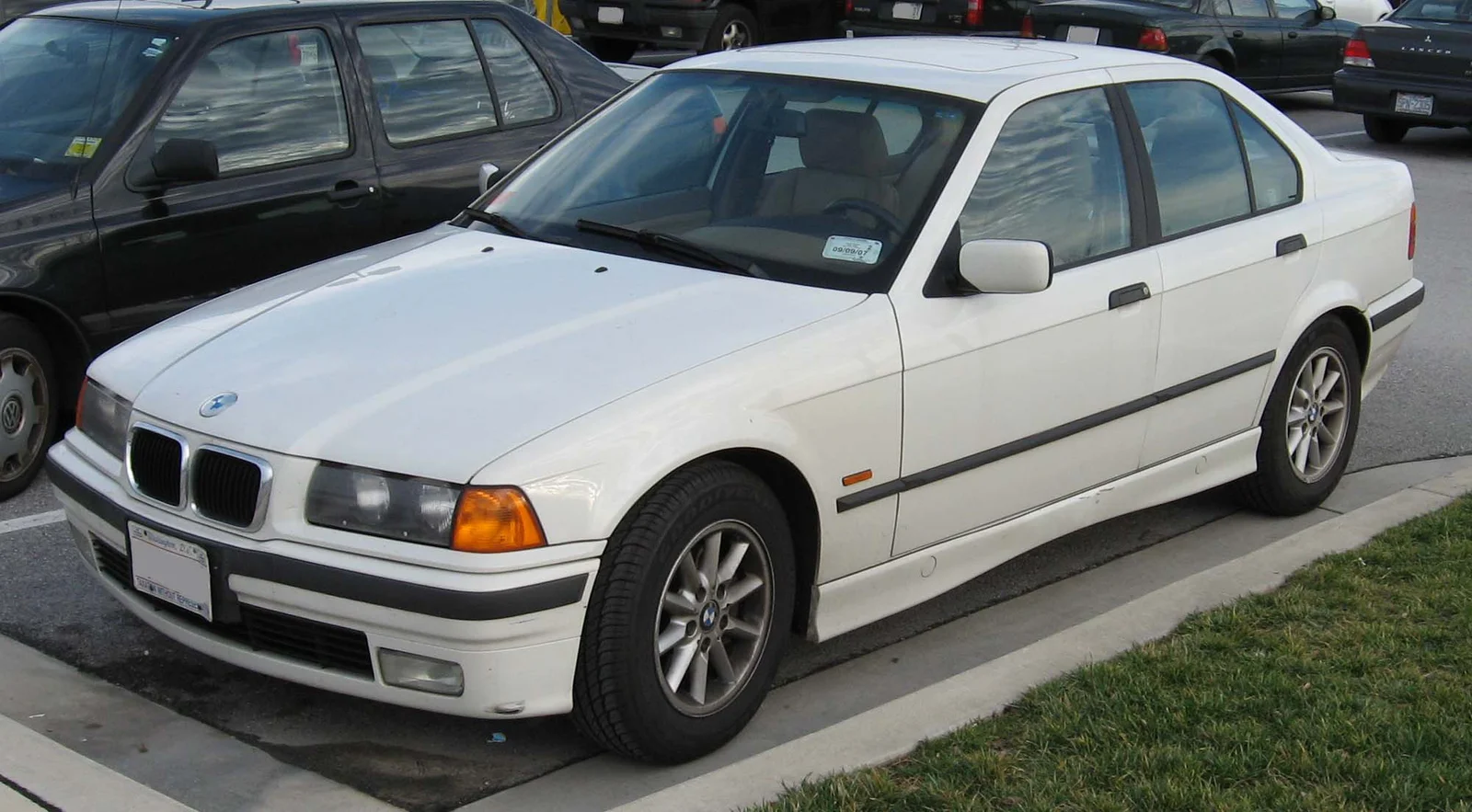
Photo: Wikimedia Commons (public domain).
Other models
Found your model?
Join the club