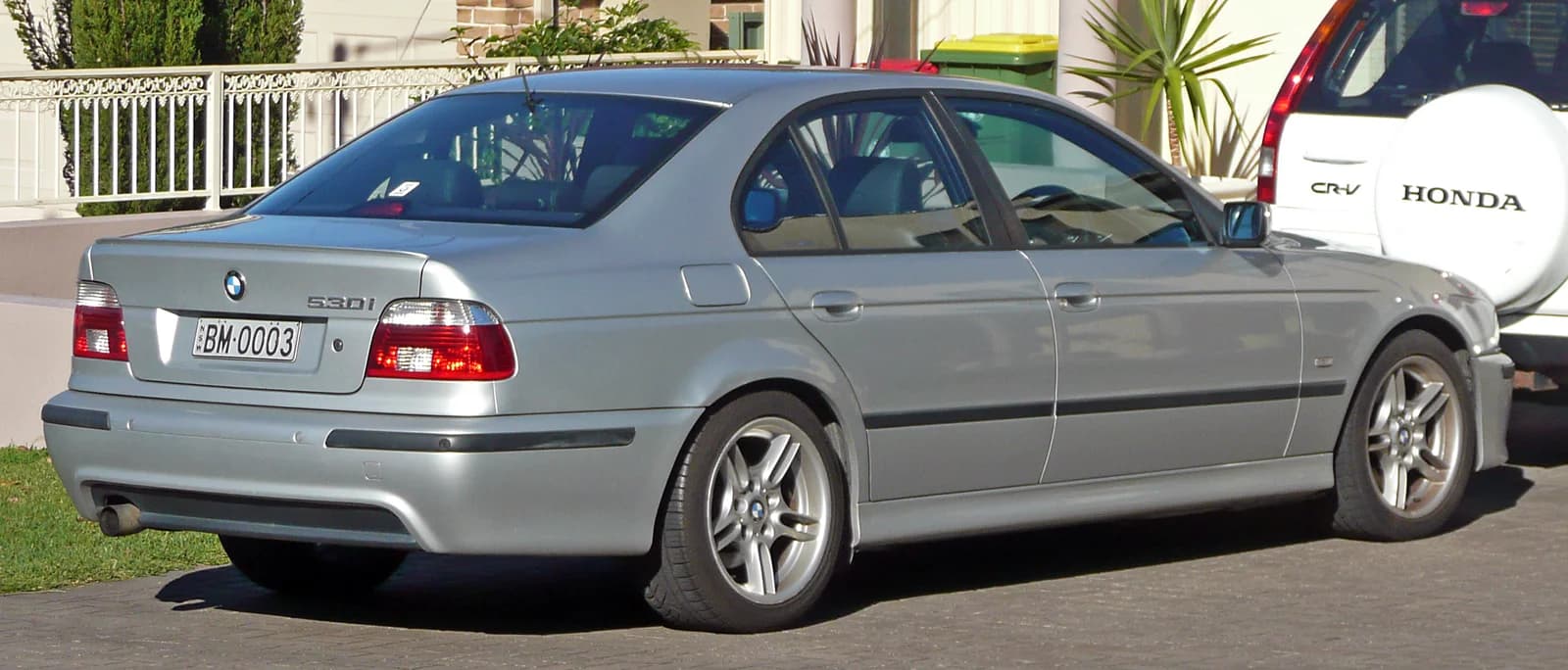
BMW E39 (1995–2003) — History, Engines, Weak Points, Fuel Consumption
The BMW E39 is the fourth generation of the 5 Series, produced from 1995 to 2003. Many enthusiasts still call it the best 5 Series ever built: an aluminum front suspension, a near-perfectly balanced chassis, and a design that hasn't aged even a quarter-century later. This generation caught BMW at the peak of mechanical engineering, before electronics took over.
History
The E39 replaced the E34 in 1995, initially as a sedan, with the Touring wagon added in 1997. The model was significantly lighter than its rivals thanks to extensive use of aluminum in the front suspension and hood — a rare choice for this class in the mid-90s.
The BMW M5 E39 debuted in 1998 with the S62 engine — a naturally aspirated 4.9L V8 producing 400 hp. Many consider it one of the greatest M5s in history: the combination of a business sedan and a genuinely sporting character made it a benchmark for decades to come.
E39 production ended in 2003 with the transition to the E60.
Engines
Petrol:
- M52TU / M54 — inline-six on 520i/523i/525i/528i/530i, the VANOS-equipped engine lineage.
- M62 / M62TU — V8 on 535i/540i. Early M62 engines (pre-1998) had a known Nikasil cylinder-coating issue (see below); BMW later switched to Alusil.
Diesel:
- M51 / M57 — inline-six, on 525td/525tds/530d.
M5:
- S62 — a naturally aspirated 4.9L V8, 400 hp. One of the most iconic engines in M division history, never repeated since — every M5 that followed went turbocharged.
Weak Points
- Cooling system (M52TU/M54). Same story as the E46/E36 engines of this generation — the plastic radiator, expansion tank, and water pump impeller need preventive replacement around 150,000 km.
- Nikasil on early M62 engines (pre-1998). The cylinder coating on some early V8s degraded due to high-sulfur fuel in certain markets, leading to increased oil consumption and wear. BMW extended the warranty to cover this; on cars built after 1998 (with Alusil coating) the issue no longer applies.
- VANOS. Seals wear out over time across the M52TU/M54/M62 engine family.
- Timing chain guides. At high mileage, the plastic guides on M54/M62 engines can wear — in rare cases leading to serious engine damage, so service history is worth checking.
- Air suspension and self-leveling (Nivomat). On wagons and top-spec versions, needs attention as the car ages.
- S62 (M5): VANOS and maintenance. The engine is generally reliable with proper care, but demands attentive, timely maintenance — this isn't a cheap car to run.
Fuel Consumption
| Engine | Model | Consumption, L/100km |
|---|---|---|
| M52TU/M54 (6-cyl) | 520i / 523i | ~9–10 |
| M54 (6-cyl) | 528i / 530i | ~10–11 |
| M62 (V8) | 535i / 540i | ~13–14 |
| M51/M57 (diesel) | 525td / 530d | ~7–8 |
| S62 | M5 | ~14–16 |
Owner Feedback
The E39 is regularly called the best 5 Series generation in history — owners praise the steering precision, chassis balance, and the fact that Ernst Hoos's design still doesn't look dated. Six-cylinder versions are praised for longevity given timely cooling-system maintenance. M5 (S62) owners near-universally call this V8 one of the greatest engines ever fitted to a production BMW — though running the car takes discipline and budget. The most commonly repeated practical advice: check the VANOS and cooling-system service history, and on early V8s, confirm the build year because of the Nikasil issue.
Photos
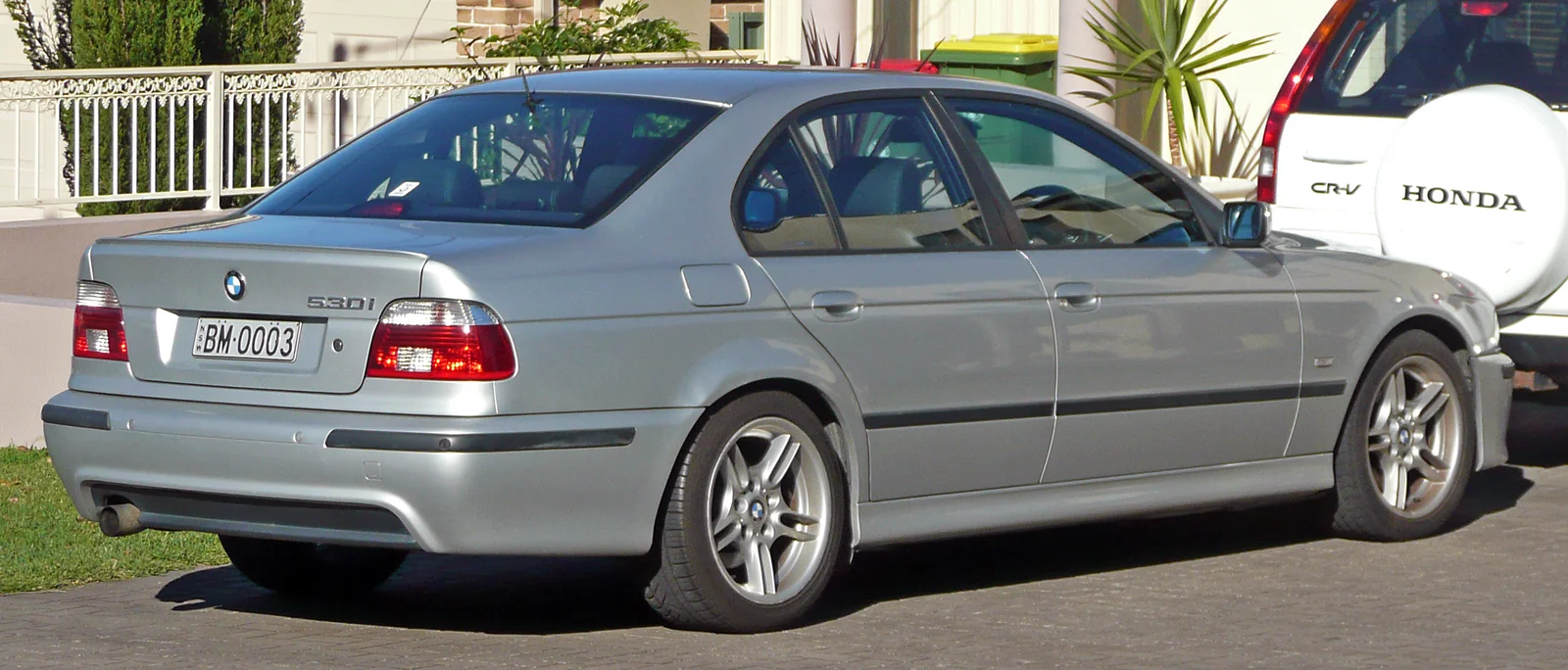
Photo: Wikimedia Commons (public domain).
Other models
Found your model?
Join the club