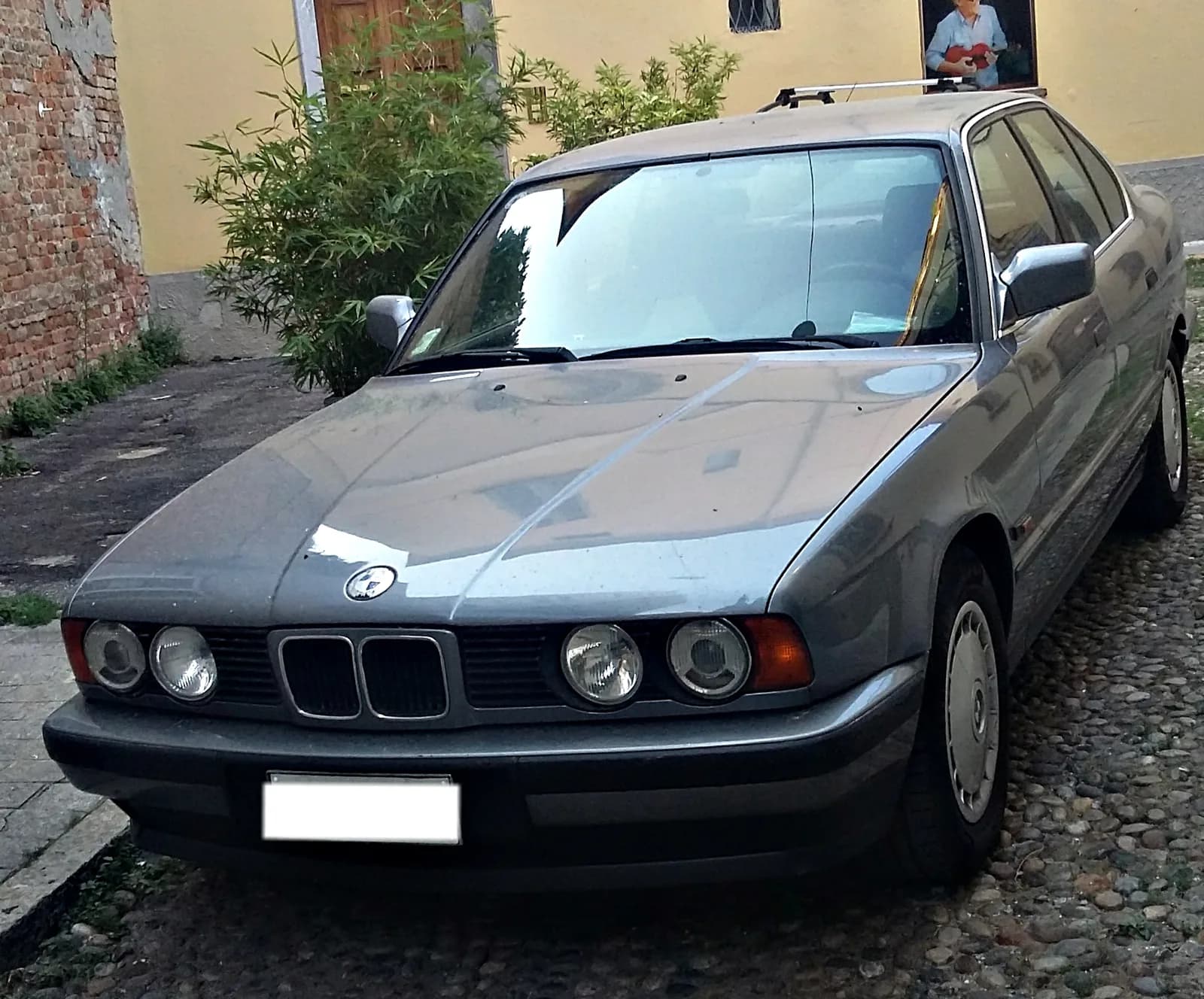
BMW E34 (1988–1996) — History, Engines, Weak Points, Fuel Consumption
The BMW E34 is the third generation of the 5 Series, produced from 1987 to 1996. It's widely regarded by enthusiasts as one of the most honest, driver-focused 5 Series generations — direct steering, minimal electronic intervention, and a reputation for outlasting the more complex E39 that replaced it.
History
The E34 launched as a sedan in January 1988, succeeding the E28. A Touring wagon body arrived in September 1992 — the 5 Series' first estate. BMW replaced the sedan with the E39 in December 1995, though the E34 Touring remained in production until June 1996.
The generation introduced several 5 Series firsts: all-wheel drive (525iX), a V8 engine (540i), stability control (ASC) and traction control (ASC+T), adjustable damping (EDC), and a 6-speed manual gearbox. Nine different engine families were used across its lifetime — an unusually wide spread for one generation.
M5 (E34): powered by the S38 straight-six, originally 3.6 L (315 hp), later enlarged to 3.8 L (335 hp). It's frequently cited by enthusiasts as one of the purest M5s ever built — minimal electronic assistance, maximum driver feedback.
Engines
Petrol — 4-cylinder:
- M20 — 2.0–2.7 L inline-four/six-derived unit on early 518i/520i/525i cars; the timing belt is a scheduled maintenance item, and the cylinder head is known to crack between cylinders 5 and 6 if not warmed up carefully.
Petrol — inline-six:
- M50 / M50TÜ — replaced the M20 on the 520i/525i partway through production; a durable, long-lived engine family when properly maintained (oil and V-belt service kept up).
- M30 — 3.4 L six on the 535i (despite the "3.5" badge and intake-manifold casting).
Petrol — V8:
- M60 — 4.0 L V8 introduced on the 540i in 1993, offered in both sedan and (outside the US) Touring body styles.
M5:
- S38 — 3.6 L, later 3.8 L, naturally aspirated straight-six; 315 hp initially, 335 hp in later 3.8 L form.
Weak Points
- Cooling system. A known weak point across the six-cylinder range: some plastic cooling components (notably the upper radiator neck) fail with age, and overheating risks head-gasket damage. Budgeting for a full cooling-system overhaul is common advice.
- M20 cylinder head cracking. Can crack between cylinders 5 and 6 if the engine isn't warmed up gently — an expensive repair.
- Rust. From 1993, BMW switched to water-based paint, and rust became more of an issue — doors rusting from the bottom up, and jacking points are a notorious rust spot, especially on cars driven through winters.
- Window regulators are a common failure point, along with heating/AC systems that develop faults over time.
- Front suspension bushings and ball joints degrade with age and mileage, producing vague steering and clunking noises.
Despite these points, the E34 is frequently described as one of the most reliable BMWs of its era — staying out of the shop noticeably more than the E39 that followed it.
Fuel Consumption
Average combined-cycle figures — real-world figures on a car this age depend heavily on condition and driving style:
| Engine | Model | Consumption, L/100km |
|---|---|---|
| M20 (early) | 525i (170 hp) | ~10.2 (owner-reported) |
| M50 (later) | 525i (192 hp) | ~10.3 (owner-reported) |
| M60 V8 | 540i | 11.4 (official combined; owners report 9–17 depending on style) |
| S38 | M5 | ~13–14 (estimated — no E34 M5-specific figure found; anchored below the E39 M5's ~15.3) |
Owner Feedback
Recurring themes from reviews and enthusiast forums, without quoting specific owners:
The E34 is consistently described as the most direct and honest 5 Series to drive — climate controls, steering, and overall driving feel are all praised as unfiltered compared to later, more electronically-assisted generations. The absence of extensive electronic safety nets is framed as a feature, not a limitation: the car communicates clearly what's happening beneath the driver. The E34 M5 in particular is singled out as one of the purest M5s ever built. Owners repeatedly note that the E34 demands more attentive maintenance than a modern car, but rewards it with a reputation for outlasting the more complex E39.
Photos
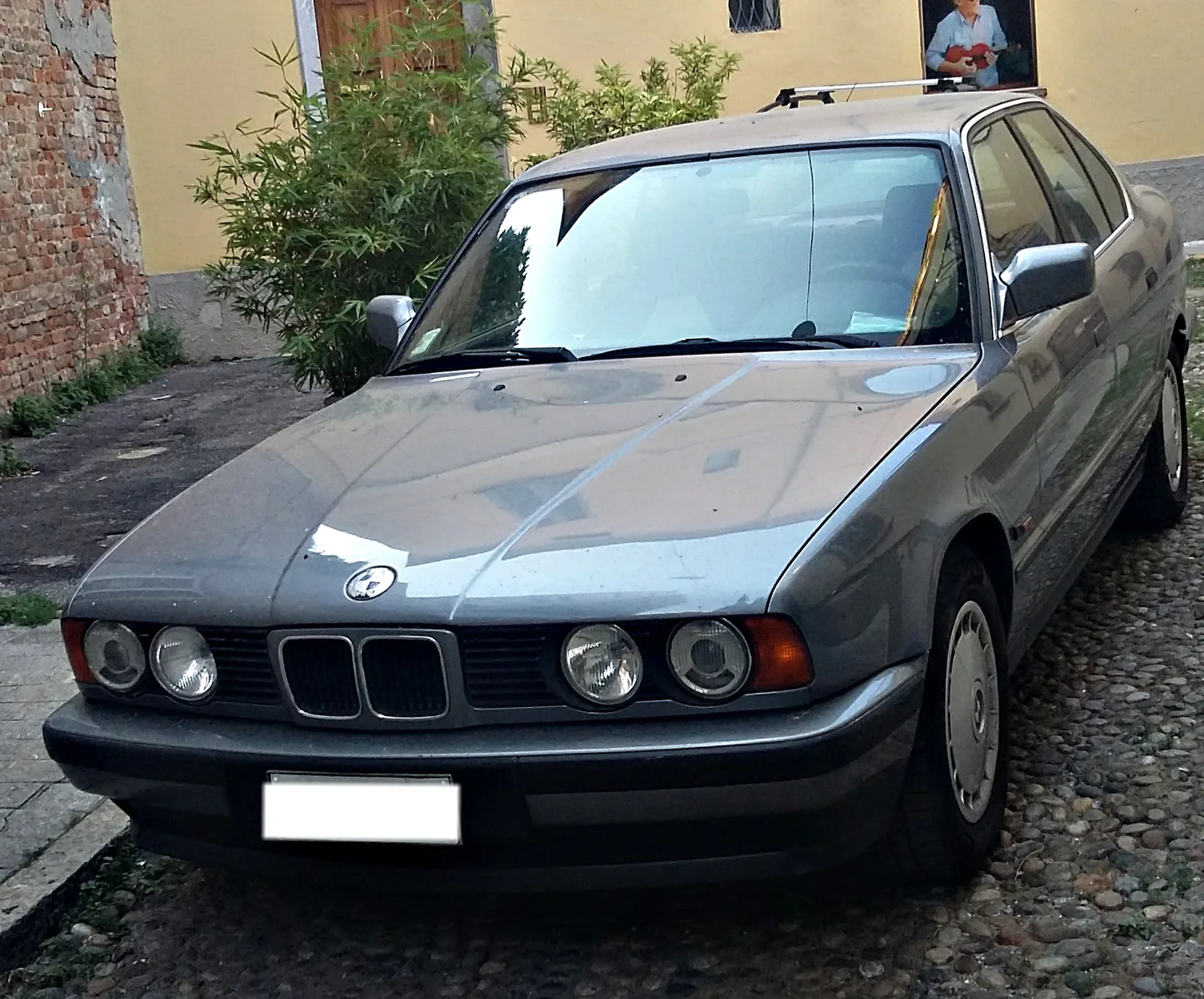
Photo: Wikimedia Commons (public domain).
Other models
Found your model?
Join the club