BMW E92 (2006–2013) — History, Engines, Weak Points, Fuel Consumption
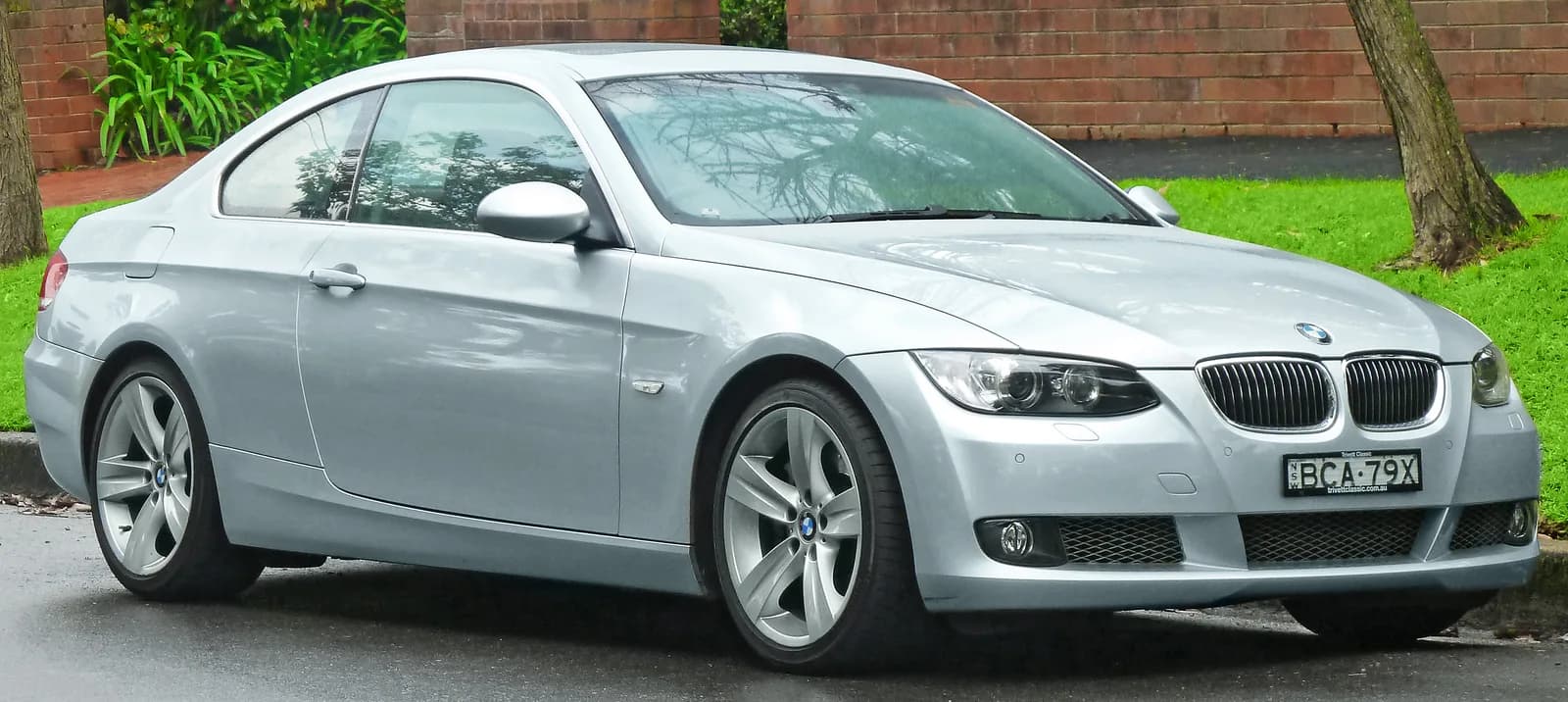
The BMW E92 is the two-door coupé body of BMW's fifth-generation 3 Series. It shares its mechanicals with the E90 saloon, E91 Touring and E93 convertible, which is why much of the reference data is published at the "E90 family" level. The E92 is the last coupé to be part of the 3 Series: with the following generation, BMW split the coupé and convertible off into a separate 4 Series.
History
The fifth-generation 3 Series was split across four body codes: E90 (saloon), E91 (Touring estate), E92 (coupé) and E93 (convertible). The range was introduced in December 2004 and produced until October 2013. The E92 coupé itself arrived later than the saloon — as a 2006 launch / 2007 model year car.
The E92's predecessor was the E46 coupé. With the next generation, the saloons and estates were replaced by the F30/F31, but the coupé and convertible bodies were moved by BMW into the new 4 Series (F32/F33) — so the E92 effectively has no direct "3 Series coupé" successor.
The 2010 facelift (LCI) was largely cosmetic and electronic: revised LED rear lights, trim and interior detail changes, and iDrive updates (the CIC head unit). It was not a mechanical overhaul. Sources disagree on exactly which small feature landed in which year, so treat year-by-year equipment claims with caution.
M3 (E92): the V8-powered M3 coupé ran from 2007 to 2013, with a 2010 LCI refresh. This was the only generation of M3 to use a V8.
Engines
The E92's engine range was broad. Note that BMW quotes power in metric PS, whereas US "hp (SAE net)" figures are sometimes a point or two different — which accounts for some of the discrepancies between sources.
Petrol — 4-cylinder:
- N43 / N46 — 2.0 L (~1,995 cc) on entry cars. The 320i is listed at 156 hp. A 318i (~143 hp) version is cited for some markets, but it could not be verified across multiple independent sources — treat it as market-dependent.
Petrol — naturally aspirated inline-six:
- N52 / N53 — 2.5 L (~2,497 cc) and 3.0 L (~2,996 cc) with VVT. The N53 (2006–2013) is the direct-injection, lean-burn evolution that replaced the N52 in certain (mainly European) markets.
- 323i — 2.5 L, ~177 hp
- 325i — 2.5 L, 218 hp
- 328i — 3.0 L, ~230 hp (chiefly North America and select markets)
- 330i — 3.0 L, 272 hp
Petrol — turbocharged inline-six:
- N54 — 3.0 L (2,979 cc), twin-turbo. It debuted in the 335i; after its N55 successor arrived in 2009, it began being phased out.
- 335i (N54) — 306 PS / ~302 hp
- N55 — 3.0 L (2,979 cc), single twin-scroll turbo. It replaced the N54 in the 335i from 2009/2010, at the same 306 hp headline output.
- 335is — a higher-output N54 variant, 320 hp and 332 lb-ft, with an overboost function raising torque to ~370 lb-ft; offered from the 2011 model year in coupé/convertible only.
Petrol — V8 (M3):
- S65 (S65B40) — 4.0 L (3,999 cc) naturally aspirated V8, individual throttle bodies, ~12.0:1 compression, redline around 8,300–8,400 rpm. European sources quote 420 PS at 8,300 rpm, which equals roughly 414 hp (SAE) in US data — a units difference rather than a genuine conflict. Later limited editions (GTS) went to ~450 hp.
Diesel:
- N47 — 2.0 L (~1,995 cc). 320d — 177 hp.
- M57 / N57 — 3.0 L (~2,993 cc) straight-sixes.
- 325d — 197 hp (some sources list 204 hp for later cars — a disagreement)
- 330d — 231 hp pre-facelift, 245 hp on the 2010 LCI
- 335d — 286 hp
Weak Points
- N54 (335i, roughly 2007–2010): the best-known fault is high-pressure fuel pump (HPFP) failure; early pumps were under-built, prompting recalls, warranty extensions and several revisions. Also typical is wastegate rattle in the turbochargers from actuator/rod wear — often the most expensive common issue, because it can require turbo replacement. Injector issues, water-pump failure and charge-pipe failure are also documented, especially under high boost/tuning.
- N55 (335i, 2010+): widely regarded as more reliable than the N54; the main complaint is elevated oil consumption.
- N52 / N53 (325i / 330i / 328i): valve-cover gasket oil leaks and electric water pump failure (plastic impeller, overheating risk) are the most cited N52 faults. VANOS solenoid issues and eccentric-shaft (Valvetronic) sensor faults causing rough running and power loss also occur. Specific to the N53: HPFP failure, expensive piezo injectors (require coding), NOx sensor / catalytic-converter faults (lean-burn related), carbon build-up on the intake valves, and spark-plug/coil wear. Owners repeatedly flag the NOx sensor / catalyst code as a recurring headache.
- S65 (M3): the signature concern is rod-bearing wear; many owners do preventive replacement around 100,000–130,000 km, often with upgraded bearings. Throttle-actuator failure is also typical, from worn internal gears/PCBs, triggering limp mode and fault codes (e.g. 2B15/2B16/2B21). Cooling-system leaks (water pump/thermostat) are noted too.
- M3 transmissions: the 7-speed DCT is regarded as generally robust, but sump-pan and mechatronic gasket leaks are a recognised recurring service item, sometimes at surprisingly low mileage. The 6-speed manual is simpler and more reliable, but the clutch wears with hard use.
- Chassis-wide: the standard run-flat tyres draw consistent criticism for a harsh ride and tramlining; many owners switch to conventional tyres for comfort.
Fuel Consumption
Two important caveats: the single "combined" figures from spec sites are the old NEDC lab figures — optimistic relative to real driving. Owner-reported real-world figures are shown where they could be verified.
| Engine | Model | Consumption, L/100km (NEDC) |
|---|---|---|
| N43/N46 (2.0) | 320i | 7.9 |
| N52/N53 (2.5) | 325i | 7.1 |
| N52/N53 (3.0) | 330i | 8.7 (owner real-world ~11–15) |
Owner Feedback
Recurring themes from reviews and enthusiast forums, without quoting specific owners:
The N54-powered 335i remains the most-discussed variant — owners warn about the HPFP and wastegate rattle, while the later N55 is praised as noticeably more reliable, with oil consumption its main caveat. The E92 M3 is singled out for its naturally aspirated S65 V8 and engine character, but owners flag preventive rod-bearing replacement and the temperamental throttle actuators. The naturally aspirated N52/N53 sixes come up most often in the context of valve-cover leaks, the water pump and — on the N53 — the NOx sensor. A separate constant theme is the standard run-flat tyres: their harshness pushes many owners toward conventional rubber.
Photos
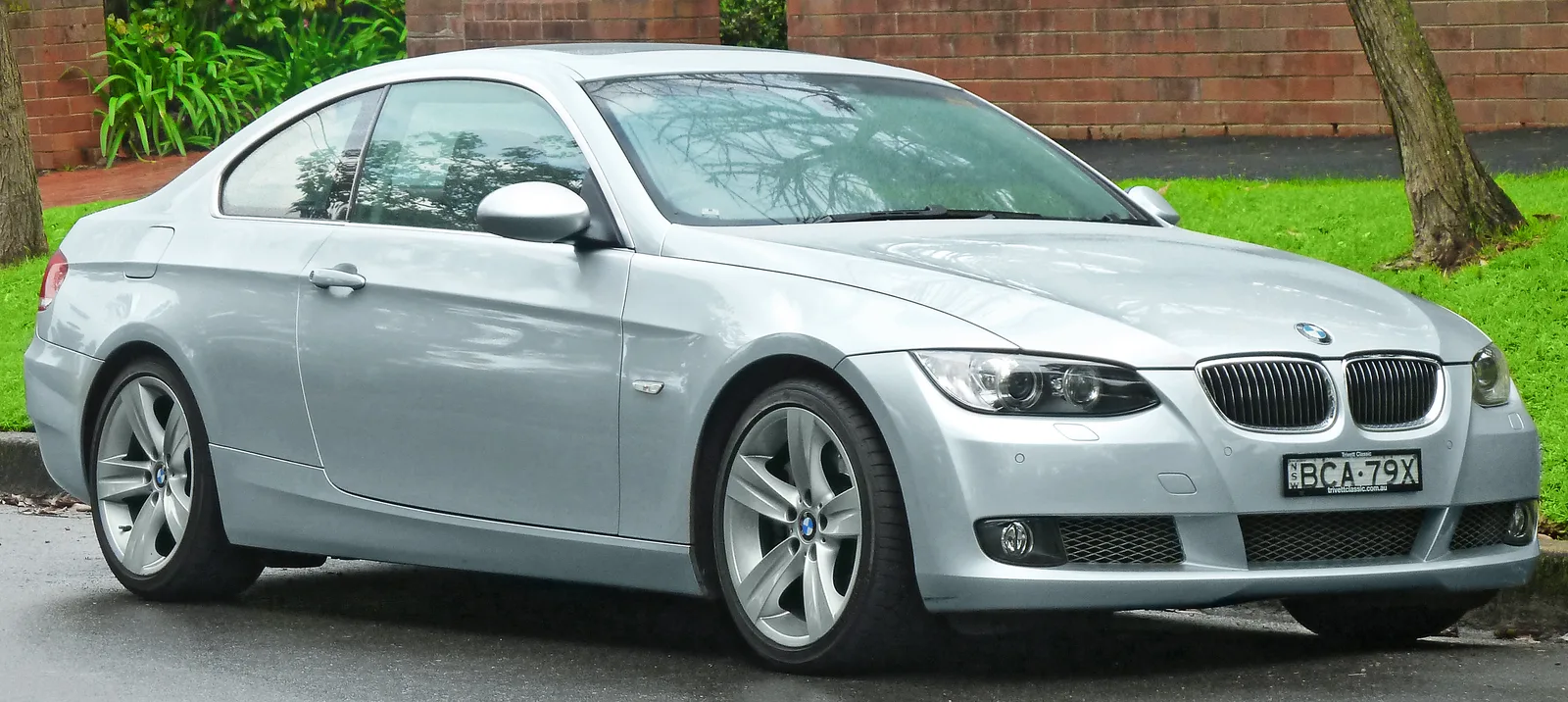
Photo: Wikimedia Commons (public domain).
Other models
Found your model?
Join the club