BMW E87 (2004–2011) — History, Engines, Weak Points, Fuel Consumption
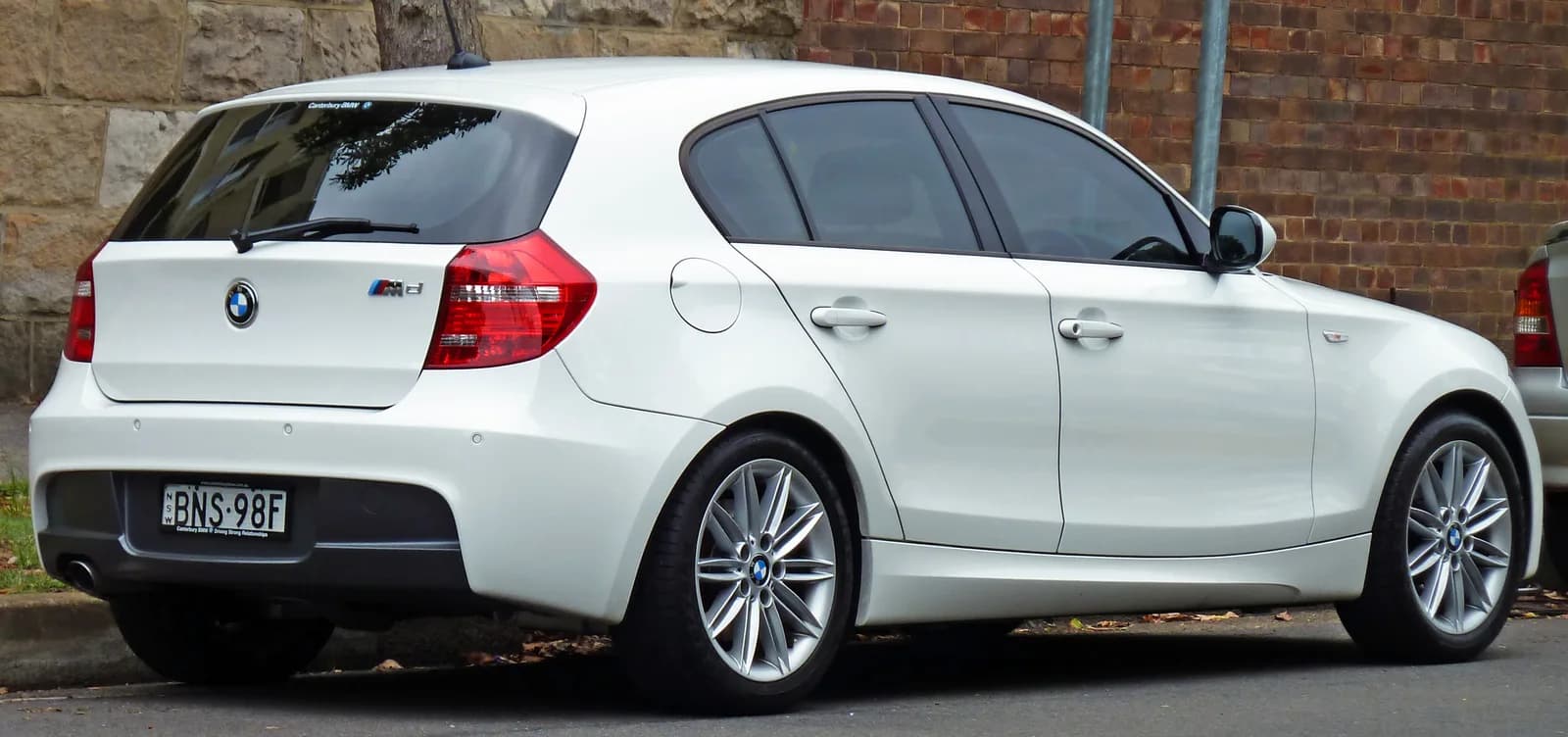
The BMW E87 is the first generation of the 1 Series and the five-door hatchback that launched the range in 2004. It's still one of the few rear-wheel-drive hatchbacks ever sold, sharing its platform with the 3-door E81, the E82 coupé and the E88 convertible.
History
The 1 Series launched globally in September 2004 as the E87 five-door hatchback, built in Leipzig and Regensburg. The 3-door E81 followed in May 2007, the E82 coupé in November 2007, and the E88 convertible shortly after.
A March 2007 facelift (LCI) brought the biggest mechanical change of the generation: the N43 four-cylinder replaced the older N45/N46 units, electric power steering replaced the previous hydraulic setup, and efficiency-focused updates (marketed as EfficientDynamics) arrived across the range. The N47 diesel also debuted with this facelift, replacing the M47.
130i / 135i: the range-topping models paired the naturally aspirated N52 3.0 L straight-six (258 hp, 130i) or, from 2007, the twin-turbo N54 3.0 L (306 hp, 135i) with rear-wheel drive in a compact hatchback body — a combination with few direct rivals in the hot-hatch segment.
Engines
Petrol — 4-cylinder (pre-facelift):
- N45 / N46 — naturally aspirated 1.6 L and 2.0 L fours; the 116i (85 hp) used the N45, the 118i (129–143 hp) the N46. Typical of early Valvetronic-generation engines: valve-cover gasket leaks, water pump faults, and Valvetronic control-system issues.
Petrol — 4-cylinder (post-facelift):
- N43 — naturally aspirated 1.6 L / 2.0 L, replaced both N45 and N46 from the 2007 facelift. Its defining weakness is timing-chain-guide lubrication, a widely documented design issue across the engines that used it; ignition coil and fuel injector faults are also reported.
Petrol — inline-six:
- N52 — 3.0 L naturally aspirated six on the 130i, 258 hp.
- N54 — 3.0 L twin-turbo six on the 135i (from 2007), 306 hp — the same engine family later used in the E9x 335i.
Diesel:
- M47 — 2.0 L four-cylinder diesel, pre-facelift.
- N47 — 2.0 L four-cylinder diesel, replaced the M47 from March 2007; the N47's own timing-chain wear is a documented issue on affected model years.
Weak Points
- N45/N46 timing chain elongation (2004–2007 cars). A stretched chain produces a rattle on cold start, uneven running, and can lead to serious engine damage if ignored; preventive chain/tensioner/guide-rail replacement around 100,000 km is common advice.
- N43 timing chain guides. Inadequate lubrication to the chain guides and tensioner is a well-documented, fundamental weak point of this engine family.
- N47 timing chain. Similarly affected by chain wear on some model years — check service history and listen for cold-start noise.
- Ignition coils (2006–2010 cars). Can fail, causing misfires and rough running.
- Oil separator / CCV (crankcase ventilation). A known failure point — when it fails, it causes excessive crankcase pressure, oil leaks, and rough idle.
- Electric windows, especially rear doors, can fail between 60,000 and 100,000 km.
Fuel Consumption
Real-world figures run meaningfully above official combined-cycle numbers — aggregated owner data puts the 1 Series roughly 26% over spec on average, across both petrol and diesel:
| Engine | Model | Consumption, L/100km |
|---|---|---|
| N46 (2.0 petrol) | 120i | 6.4 official; ~8.2 owner-reported |
| N47 (2.0 diesel) | 120d | 5.4 official; ~6.6 owner-reported |
| N47 (2.0 diesel) | 118d | 5.4–5.6 official; ~6.1–6.6 owner-reported |
Owner Feedback
Recurring themes from reviews and enthusiast forums, without quoting specific owners:
The 130i and 135i are repeatedly singled out as standing apart from every other hot hatch on sale — rear-wheel drive, a naturally aspirated or twin-turbo straight-six, and a genuinely balanced chassis, at the cost of hatchback practicality most rivals don't sacrifice. Timing-chain concerns on the N45/N46 and N43 four-cylinders come up often enough that buyers are commonly advised to check service history closely, or to lean toward post-facelift N47 diesels once that engine's own chain issues on affected years are ruled out. Diesel models are consistently reported as noticeably more fuel-efficient in daily use than the petrol range. Owners frequently describe the E87 as a design that still looks distinctive today, precisely because its rear-wheel-drive proportions have no real equivalent among later front-wheel-drive hatchbacks.
Photos
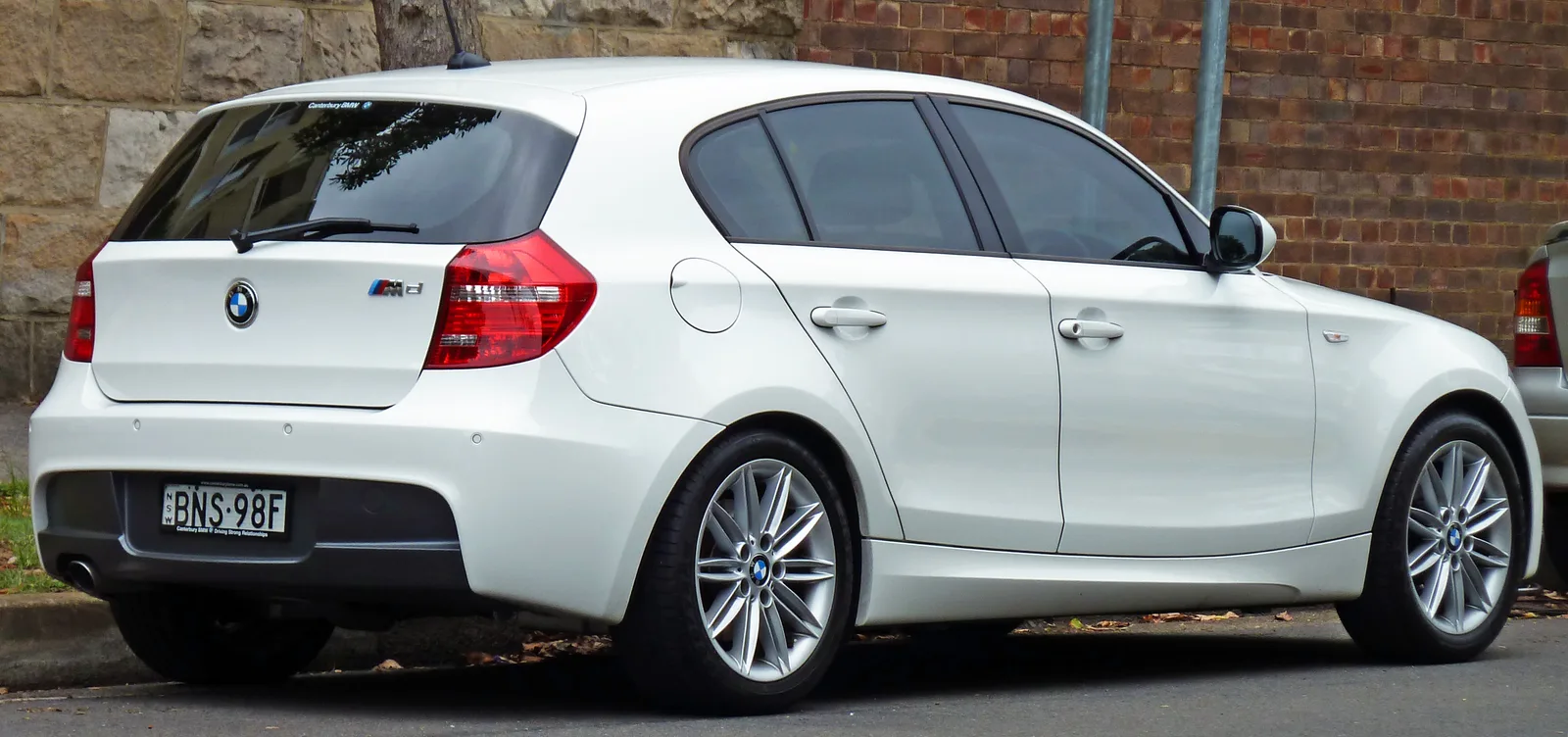
Photo: Wikimedia Commons (public domain).
Other models
Found your model?
Join the club